
This is another Business English TBL lesson for my pair of learners who work in lobbying for a multinational company here in Brazil. This lesson followed TBL Lesson #6 so if you haven’t read that one I suggest you do so you get where I’m coming from!
In our previous lesson, students had to name the ministries in Brazil and then rank them in terms of importance. For today’s lesson, students did the same activity by naming the departments in their company and ordering those in terms of importance. This was a very easy task to set up because students already knew what they were supposed to do due to previous experience.
Students named the departments, I wrote them on the board and asked them what each department was responsible for so I could better understand what they were talking about and also to give them the chance to use some relevant language.
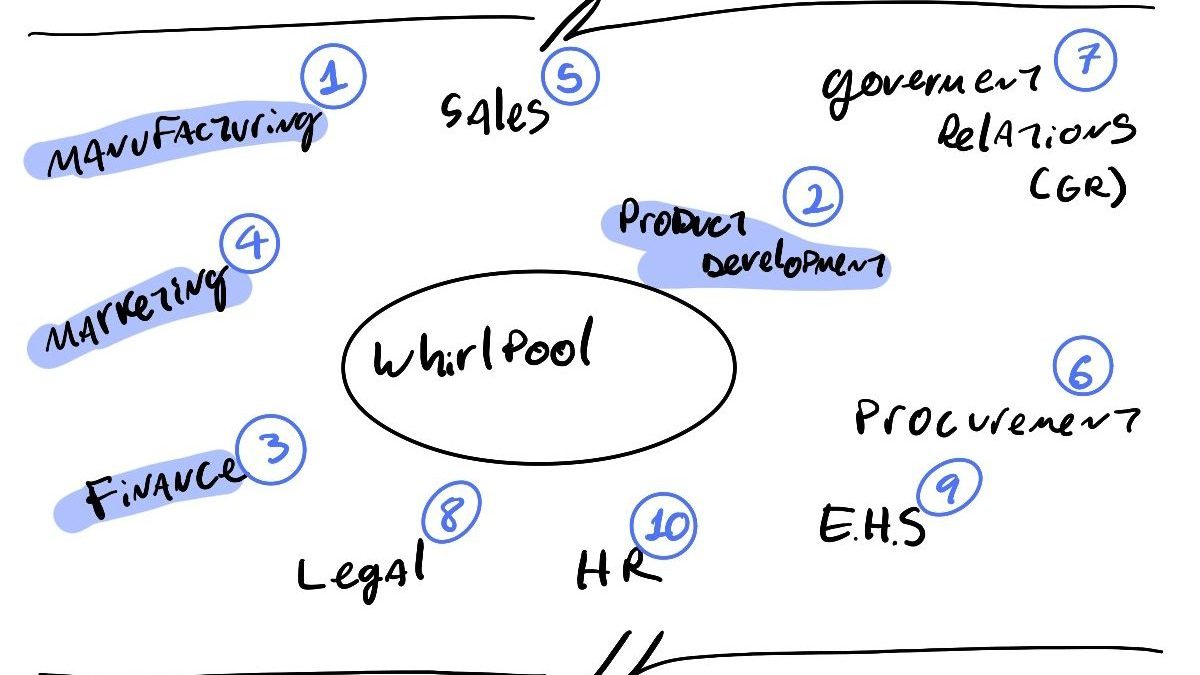
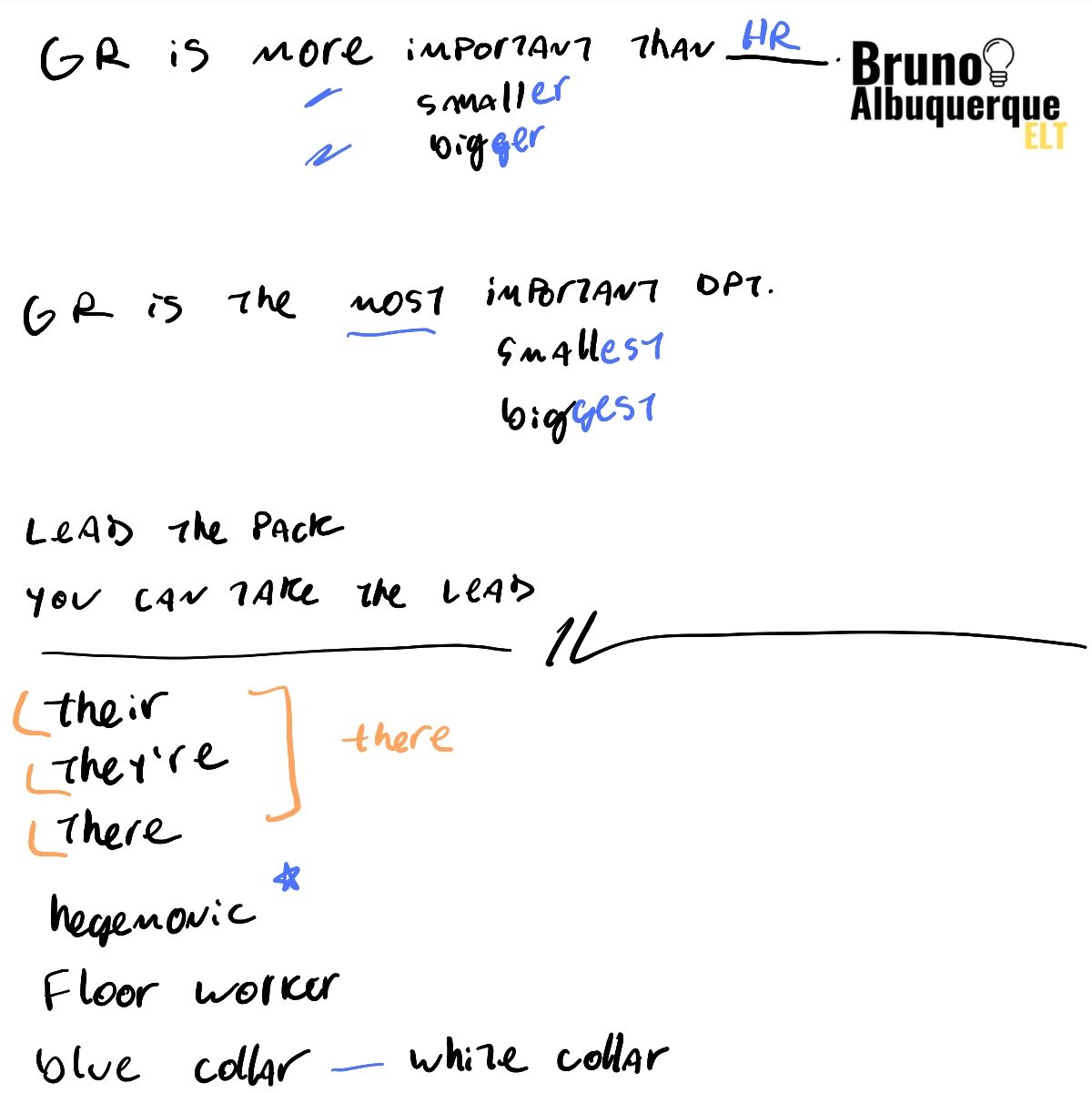
After listing the departments and describing what they were responsible for, students ranked the departments individually and then shared their rankings with each other in order to reach a consensus. Below you see some of the language produced and my notes for feedback.
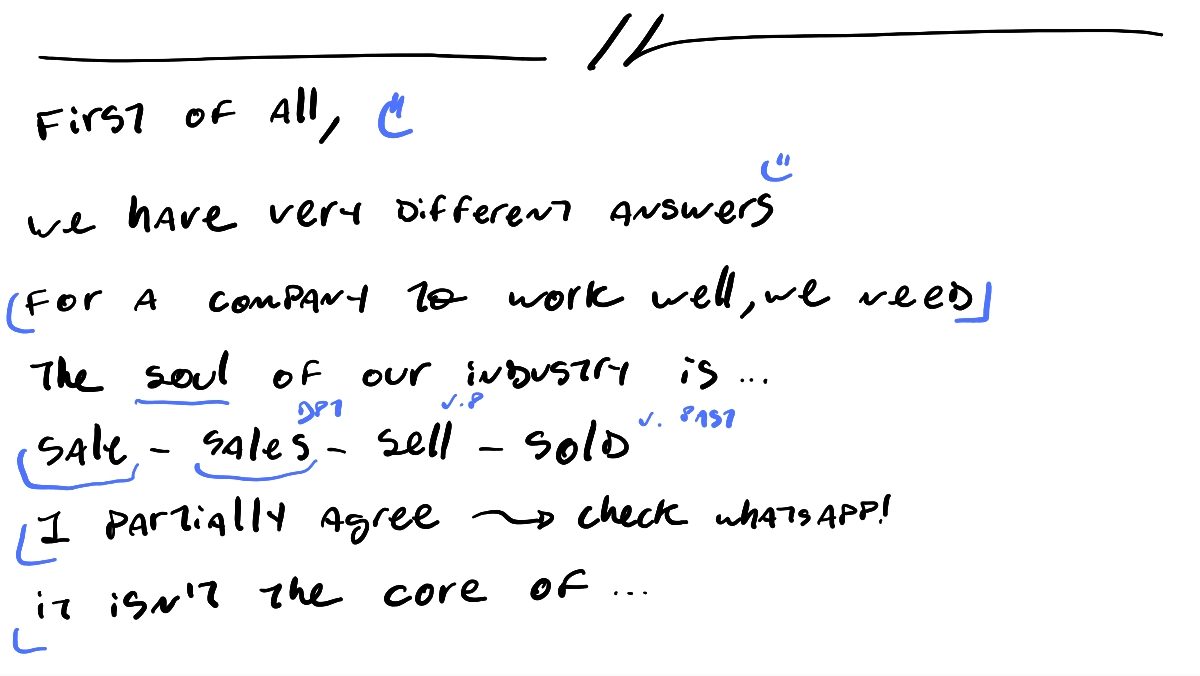
After some feedback and working on some emergent language, I decided it was time to close this unit of learning. I asked students to refer back to the CEO candidates from Lesson 1 – the one that actually started this series! – and choose a candidate to lead each of the top four departments in their company.
Students talked for a couple of minutes and managed to decide fairly easily who would lead each department. I gave students some feedback on their performance and that was the end of the lesson.
For the next class, we will begin a new unit of learning. I remember students mentioned they have frequent performance reviews and that they felt very strongly about them. That will be the theme of the unit and the source of our conversations and language.
Funny thing though, as I write this I look back to find the references for the lessons and I just realized that the lesson I described above is kind of a mishmash of TBL Lesson #4 which I only got to teach just now! Personally, this is one of the things I like the most about flexible, reactive DOGME/TBLT teaching. It is not because I planned something that this something HAS to happen the way I planned or on the day I thought it would happen. At the time I wrote TBL Lesson #4 I thought that it would be a good fit for that moment in the syllabus but apparently my learners and the ‘flow’ of the course disagreed.
I guess this is what Thornbury means when he says that the syllabus of a DOGME course is more like the history of what happened in class, not an attempt to predict and control the future. Perhaps teachers would do a better job at being historians rather than fortune tellers?
What a blast this has been.


 ELT in Brazil
Leave a comment