This year, 2023, I decided I wanted to go back to teaching. I have spent the last three or so years outside of the classroom, physical and remote, working on a multitude of jobs related to education, ranging from materials writing to teacher education.
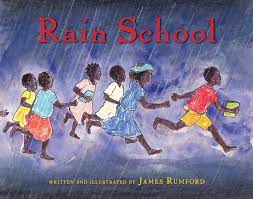
In my first week at the new school, this being the week before of the writing of this post (23/01/2023), I took part in a read-aloud session carried out by one of my coordinators. She read us the book “Rain School“ by James Rumford.
In this blog post, I am going to reflect on some of the insights I had during this read-aloud session and I highly encourage you, dear teacher, to watch it below before reading the rest of the post. I promise it is an amazing use of your time.
Quite powerful, isn’t it?
The bit that sparked this post is the building, the destruction, and the rebuilding of the school. I find it to be the perfect metaphor for what I believe a school to be.
In the book, the teacher invites the students to build the school themselves. Every student chooses how they are going to cooperate and all collaborate towards the same goal. The students then attend school for the year and leave when the school year is over. When they leave though, the rain comes and washes away the school – which is then rebuilt the following year.
This to me is the perfect idea of a school. Without students and teachers, there’s no school. Its essence, its beating heart and breathing lungs are students and teachers and this, in my opinion, makes everything else absolutely optional – simply add-ons to the school composition.
I do not think many would dispute this idea. I believe it is clear to most teachers that a school is not a physical building or classroom (online teachers would definitely agree). A school is a teacher and their students. Period. However, does this belief translate into our practice?
What I mean is, if we believe that a school, in its essence, is teacher + students, these must be central to the process, correct? Again, besides the essence, everything else is peripherals, optional items, and add-ons we could do without. This would mean that everything we do in class would stem from the interplay between teacher and students. Right?
That doesn’t seem to be the case, though.
Courses are still heavily based on an age-old grammar syllabus provided by a grammar-focused coursebook, through the shiniest digital “innovation” handpicked from an ever-growing shelf of apps and websites that have very little to do with our essence. Bruno you Luddite, you might say. Yeah, I know. Rather cranky.
On the other hand, if we agree that our essence is the interplay between teachers and students, mustn’t we be wary of these peripherals so they don’t fog our view of what really matters? Don’t get me wrong, these add-ons can definitely enhance students’ experience in class when used by a skillful and aware teacher – but they are still add-ons.
I have said this before jokingly, but I guess this has somewhat become a life goal for me: I want to teach like the greek philosophers did. Through un-hierarchical, learner- and teacher-generated dialogue in the investigation of the world we live in. And for that, all I need is the essential.

 ELT in Brazil
Leave a comment